
BREAST ARTERIAL CALCIFICATION (BAC) ASSESSMENT
One Mammogram. More Clinical Insights.
As imaging technology continues to advance, Breast Arterial Calcification (BAC) Assessment adds another layer of information to a routine screening mammogram. By identifying calcium deposits that may be visible in breast arteries, BAC Assessment can provide valuable insights to support conversations about cardiovascular health and preventive care.
Request Screening Mammogram (952) 915-4320BREAST ARTERIAL CALCIFICATION (BAC) ASSESSMENT
One Mammogram. More Clinical Insights.
At CRL Women’s Imaging, we offer the BAC Assessment, powered by cmAngio®, the first and only FDA-cleared AI technology designed to detect and measure Breast Arterial Calcifications (BAC) from your routine screening mammogram.
There is no additional imaging, radiation, appointment, or procedure required. Using the mammogram you’re already receiving, the BAC Assessment provides additional clinical information that you can review with your healthcare provider as part of a broader conversation about your overall health.
What is BAC?
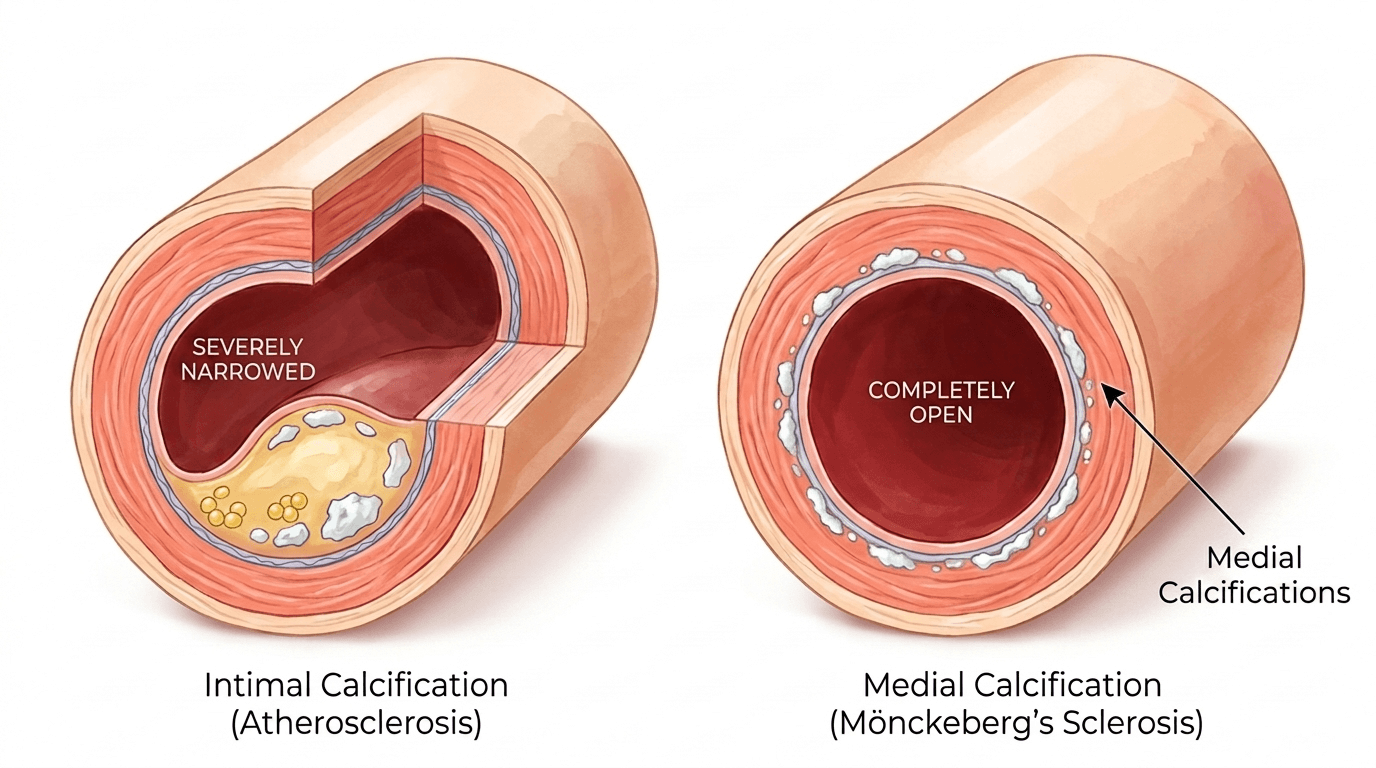
Breast Arterial Calcifications (BAC) are calcium deposits that develop within the walls of arteries in the breast. These deposits may cause arteries to become stiffer over time and appear as thin white lines on a mammogram.
BAC is commonly identified as an incidental finding during routine breast cancer screening.
BAC is a benign finding and is not associated with breast cancer.
Example mammogram highlighting BAC. Image credit: CureMetrix®.
BAC by the Numbers
12%–25%
of women undergoing screening mammography have some degree of BAC.
Less than 5%
of BAC findings identified on mammograms are documented or reported.
0.98–0.99 AUC
cmAngio® accuracy rate for BAC detection across digital mammography and 3D mammography (DBT).
170,000+
mammograms contribute to the CureMetrix Reference Library, providing age-based BAC percentile and prevalence information.
Understanding Your BAC Results
Your BAC Assessment includes a personalized scorecard designed to help you and your healthcare provider better understand your findings.
Your report may include
- Whether BAC was detected
- The location of identified BAC
- BAC length measurements
- BAC length adjusted for breast size
- BAC prevalence among women in your age group
- Your BAC percentile compared to women of similar age
- A visual chart placing your results into age-based context
More meaningful conversations
These additional insights can help support conversations with your healthcare provider about your overall health and wellness.
Frequently Asked Questions
Breast Arterial Calcifications (BAC) are calcium deposits that develop within the walls of arteries in the breast. These deposits may cause arteries to become stiffer over time and appear as thin white lines on a mammogram.
BAC is commonly identified as an incidental finding during routine breast cancer screening.
No. BAC is a benign finding and is not associated with breast cancer.
A BAC finding does not indicate breast cancer, increase your risk of breast cancer, or affect your breast cancer screening results. Your radiologist’s evaluation for breast cancer is separate from any BAC Assessment.
Medical interest in BAC has increased in recent years because research suggests a relationship between BAC and cardiovascular health.
The American College of Radiology (ACR) BI-RADS® Atlas notes that emerging evidence indicates BAC may be associated with an increased risk of cardiovascular disease.
If BAC is identified on your mammogram, it may be worthwhile to discuss the finding with your physician as part of a broader conversation about your overall health.
The significance of BAC varies based on age, personal and family medical history, existing health conditions, amount of BAC present, and other clinical findings. Your healthcare provider is best equipped to interpret BAC findings within the context of your overall health.
A BAC finding provides an opportunity to have a conversation with your primary care provider about your overall health.
Your physician can review your medical history, cardiovascular risk factors, lifestyle, and overall health to determine whether any additional evaluation or follow-up is appropriate based on your individual circumstances.
Not necessarily.
A BAC finding alone does not automatically require a cardiology referral or additional testing. Any follow-up recommendations should be based on your individual health history and determined by your healthcare provider.
The BAC Assessment is intended for women between the ages of 40 and 90 undergoing routine screening mammography.
If you have questions about whether the BAC Assessment is right for you, our team can help.
The BAC Assessment can be performed as part of your regular screening mammogram, typically once a year.
Because BAC measurements can be tracked over time, annual assessments may provide valuable information for long-term monitoring. Your healthcare provider can help determine the significance of any changes seen from one screening to the next.
Continue following the mammography screening schedule recommended by your healthcare provider.
At this time, the BAC Assessment is generally not covered by insurance plans.
The BAC Assessment fee is $100 and is paid at the time of service. The assessment is eligible for payment using Health Savings Account (HSA) or Flexible Spending Account (FSA) funds, allowing you to use pre-tax healthcare dollars to cover the cost.
Scheduling is easy. Simply request a BAC Assessment when scheduling your screening mammogram, or speak with our team when you arrive for your appointment.
BAC Assessment
$100
Generally not covered by insurance. The fee is paid at the time of service and may be paid using Health Savings Account (HSA) or Flexible Spending Account (FSA) funds.
Get more from your next mammogram.
Ask about adding a BAC Assessment when scheduling your next screening mammogram at CRL Women’s Imaging.